Tarot Card Cast & Reader Online
This online tarot reader lets you cast a spread from a full 78-card deck and explore each card by its position. Choose one card for a quick focus, three cards for a simple layout, or the ten-card Celtic Cross for a more detailed reading. Reversed cards are optional.
The tool uses prepared card meanings and spread positions. Your optional question provides a focus for your own reflection and is not automatically analyzed. Use the cards to explore possibilities and practical next steps.
Loading the Phuc Vien tarot deck…
What “tarot cast” means on this page
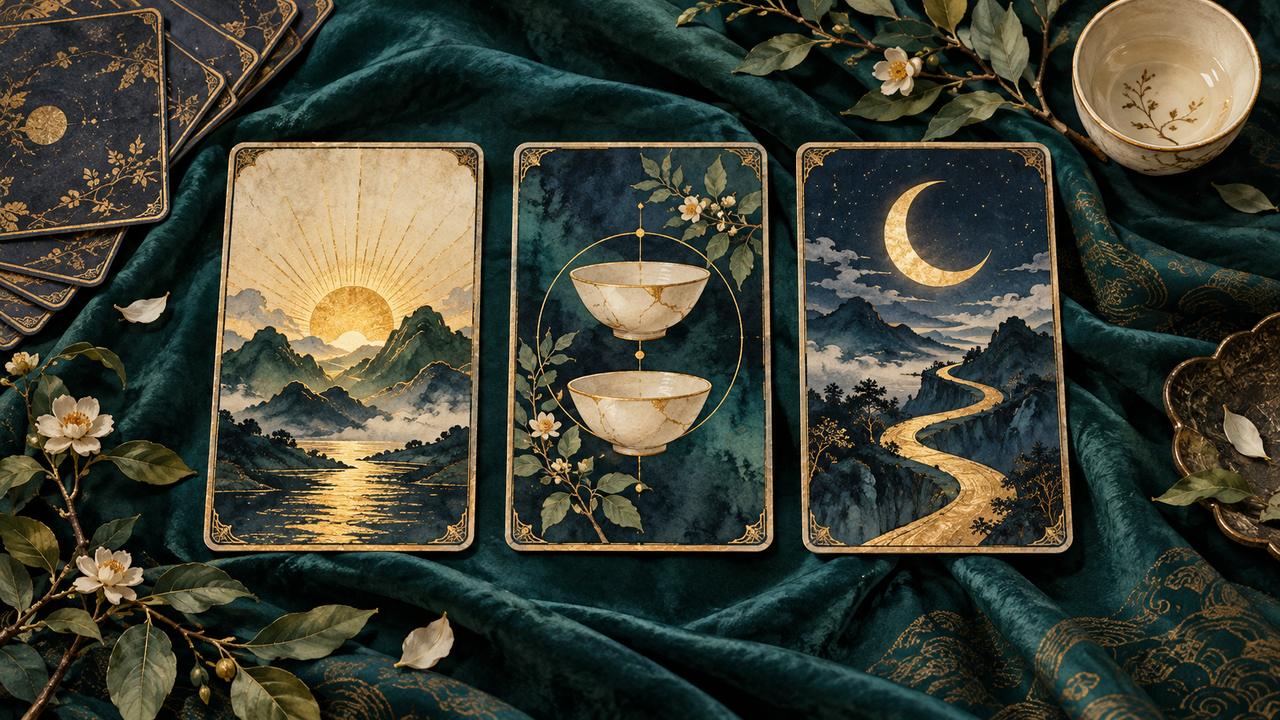
To cast a tarot spread is simply to lay cards out in a set pattern, where each spot (a “position”) gives the card a job. The first card might stand for what is behind you, the second for where you are now. The same card can say something quite different depending on where it lands.
That is all the tool above does: it lets you cast a spread from a full 78-card deck and then reads each card against its position, so you can explore a situation through a structured set of prompts.
How to use this online tarot reader, step by step
- Stay on the Shuffle & draw tab. The other two tabs, 78-card library and Method & foundations, are for learning and reference.
- Pick a spread. The default is Three cards · Past–Present–Direction. You can switch to a single card, a different three-card layout or the ten-card Celtic Cross (compared below).
- Decide on reversals. Include reversed cards is on by default. With it on, the app states that each card has a 50% chance of appearing reversed. Turn it off if you would rather work with upright meanings only.
- Write a question, or don’t. The question field is optional. It is there to keep you focused; as the app itself notes, it is not automatically analyzed.
- Press Pause & shuffle. Treat it as a short pause to settle on what you actually want to look at.
- Choose your cards face down, in order. The first card you pick fills the first position, the second fills the second, and so on. Each card can only be picked once per reading. If you would rather not choose, use Draw the remaining cards randomly.
- Read the result. You will see each card’s image, whether it is upright or reversed, what its position means, keywords and a practical reflection.
- Keep it if it’s useful. Copy reading puts the text on your clipboard; Download text saves it as a file. Both are handy if you journal.
- Start over with New reading when you have a genuinely new question.
What this tarot reader does, and what it doesn’t
What it does
- Lays out a spread from a 78-card deck, with optional reversed cards.
- Shows a prepared, editorial meaning for each card, combined with the meaning of the position it fell into.
- Lets you open any card in the library to go deeper: symbols, upright and reversed meanings, how the card applies to different topics, a common misreading, a practice exercise and reference notes.
What it doesn’t do
- There is no live psychic or human reader on the other end.
- It is not an AI that interprets your question. The question is not automatically analyzed; the displayed meanings follow the cards and spread positions.
- It doesn’t establish facts or guarantee outcomes. Tarot works with symbols; the useful part is what those symbols prompt you to notice and do.
That second point matters more than it seems. Because the text isn’t tailored, the real reading happens when you connect the card’s meaning to your situation. The app gives you the vocabulary; you supply the context.
Choosing a tarot spread: the four options compared
| Spread | Cards | Positions | Works well for | Keep in mind |
|---|---|---|---|---|
| One card · Focus | 1 | Focus | A daily check-in, or one theme to carry through the day | No context from other cards, so keep the question small |
| Three cards · Past–Present–Direction | 3 | Past, Present, Direction | Seeing how a situation has moved and where it could go next (default) | “Direction” is a possible path, not a fixed result |
| Three cards · Situation–Challenge–Guidance | 3 | Situation, Challenge, Guidance | A specific problem where you want to name the obstacle and a way through | Best when you can describe the situation in one sentence |
| Celtic Cross · Ten cards | 10 | Ten positions, each labelled in the result | Complex, layered situations you have time to sit with | Easy to get lost in; read the position labels before the cards |
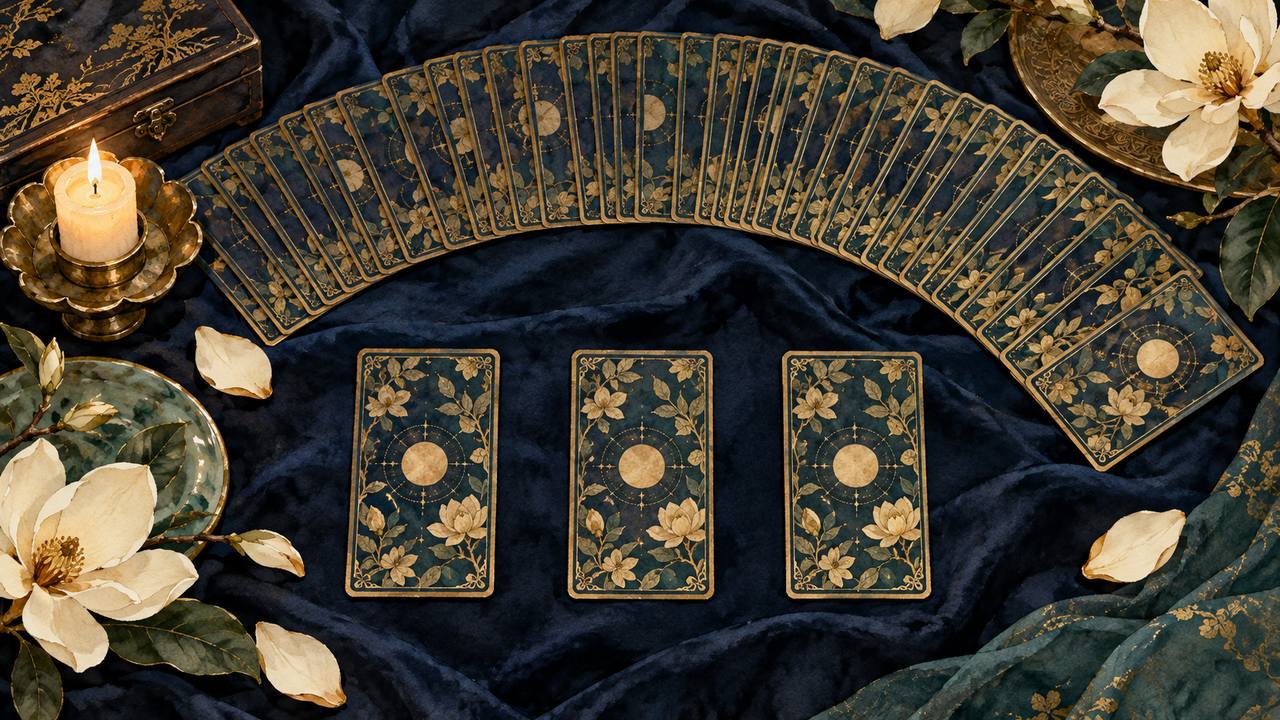
If you are new to tarot, start with one card or the default three-card spread. Ten cards with reversals on can produce a lot of text, and more cards rarely means more clarity when you are still learning the deck.
How to ask a good tarot question
A good tarot question is open, about you, and points toward something you can act on. Yes/no questions and questions about what someone else is thinking tend to produce readings that feel either empty or anxious, because the cards can’t settle either one.
A few rewrites that usually work better:
| Instead of | Try |
|---|---|
| Will this week go well? | What should I pay attention to this week? |
| Does she still love me? | What do I need to understand about how I show up in this relationship? |
| Is he going to call? | What would help me feel settled while I wait for an answer? |
| Will I get the promotion? | What strengths can I make more visible at work right now? |
| Should I quit my job? | What am I not seeing clearly about my current job? |
Notice the pattern: each version swaps a prediction for a reflection. You can still bring a real decision to the cards, but the reading should help you think, not decide for you. For anything involving your health, legal situation or money, use the cards to sort your own thoughts, then talk to someone qualified before acting.
And if you’d rather skip the question altogether, that’s fine. Drawing a single card with no question and asking yourself “where does this show up in my life today?” is a perfectly good practice.
Upright, reversed and why position matters
Reversed cards
A reversed card is one that comes out upside down. Readers treat reversals in different ways: as a blocked or delayed version of the upright meaning, as the energy turned inward, or as an excess or shortage of it. In this app, each reversed card has its own prepared meaning, so you don’t have to guess. If reversals make readings feel heavier than they should, switch off Include reversed cards for a while and come back to them once the upright meanings feel familiar.
Reading by position
Always read the position first, then the card. A card about endings means one thing in the Past position (an experience or pattern you might reflect on) and another in Challenge (an ending you may be resisting). The app shows both the position meaning and the card meaning for exactly this reason.
Conditional direction
In the default three-card spread, the final position is marked CONDITIONAL DIRECTION. Take that literally: it describes where things may head if current patterns continue. Change what you’re doing, and the direction can change with it. That’s the point of looking.

Connecting the cards into one reading
Reading cards one by one is easy. Reading them together is where the value is. A simple method:
- Scan before you read. Look at the whole spread. Many reversed cards? Several cards from the same suit? Mostly Major Arcana? These first impressions are worth noting.
- Read each card in its position. One sentence per card, in your own words.
- Find the thread. Ask what the cards have in common, or where they pull against each other.
- End with one step. Something small and concrete you can do in the next few days.
Here is a worked example using the default spread. The meanings below are common traditional readings; the app’s own text may phrase them differently.
- Past: Eight of Cups (upright). Walking away from something that stopped feeling meaningful.
- Present: Two of Pentacles (reversed). Juggling too much, and some things starting to slip.
- Direction: Page of Swords (upright). Curiosity, asking questions, gathering information.
As a hypothetical reflection, these cards could suggest considering what you have left behind, whether your commitments have become difficult to balance, and what information you still need. A practical step might be listing everything you’re currently juggling and asking one honest question about the item that drains you most. That’s a reading you can actually use on Monday morning.
Explore the 78-card library
Use the 78-card library tab to study the deck alongside your readings. After drawing, the learning sections offer symbols, upright and reversed meanings, topic examples, common misreadings, practice exercises and source notes. Compare these interpretations with what you can actually observe rather than treating a card as proof of an event.
Frequently asked questions
Is a real person or an AI reading my cards?
Neither. The reader combines prepared editorial meanings for each card with the meaning of its spread position. There is no human reader involved, and no AI interprets your cards or your question.
Does the app read my question?
No. The question is optional and is there for your own focus. The app states that it is not automatically analyzed, so the meanings you see come from the card and its position, not from what you type.
Do I need a question for an online tarot reading?
No. Many people draw without one, especially with the One card · Focus spread. If you do write a question, keep it open and about yourself.
Can tarot tell me what will happen?
Not with certainty. Tarot is symbolic interpretation. The default spread labels its final position CONDITIONAL DIRECTION. Treat it as a prompt to consider possibilities, rather than evidence of what will happen.
Is it OK to keep drawing until I get a better answer?
You can press New reading any time, but redrawing the same question until you like the result usually tells you more about what you were hoping for than about the situation. If the first reading bothers you, sit with what it raised. Come back with a new question once something has actually changed.
What does a reversed card mean?
It means the card came out upside down. Each reversed card here has its own meaning, often a blocked, inward or unbalanced version of the upright theme. You can turn reversals off with Include reversed cards.
Which spread should a beginner use?
Start with One card · Focus or the default Three cards · Past–Present–Direction. Leave the ten-card Celtic Cross until the card meanings feel familiar.
Can I save my tarot reading?
Yes. Use Copy reading to paste it elsewhere, or Download text to save a text file. Keeping readings in a journal makes it easier to notice patterns over time.