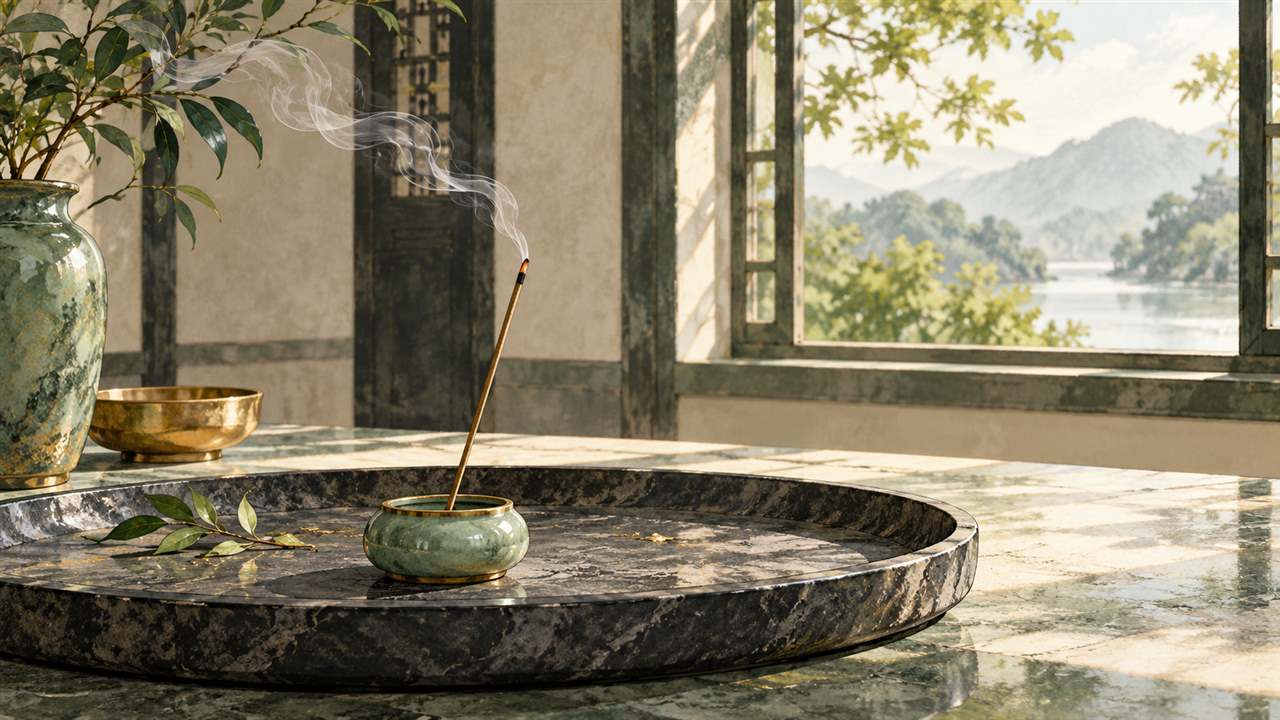
Burning incense, in brief: people burn incense for many reasons: as part of religious practice, to honor ancestors, to welcome guests, to mark a quiet moment or simply because they enjoy the scent. Its meaning depends on who is burning it, where and why, and traditions differ widely even within the same religion or country. Burning incense also produces smoke and particles indoors and is an open flame or ember, so ventilation and fire safety matter. It doesn’t purify the air, heal or bring luck. If you choose to use it, a stable fire-resistant holder, good airflow and never leaving it unattended are the basics.
This guide separates documented cultural traditions from optional home use, offers etiquette for visitors and shared homes, and covers safer habits and smoke-free alternatives for people who would rather not burn anything.
What does burning incense mean?
There is no single meaning. In some settings, incense is an offering. In others, it marks the start of prayer or meditation, shows respect for the dead, honors guests, or simply fragrances a room. The same stick of incense might be a sacred act at a family altar and a decorative choice in a neighbor’s living room.
That’s why it helps to ask two questions whenever you meet incense. First, is this part of a specific religious or cultural practice, with its own meanings and customs? Second, or is it personal, contemporary use, where the meaning is whatever the person brings to it? Both are real, but they call for different kinds of respect.
Documented cultural objects: two museum examples
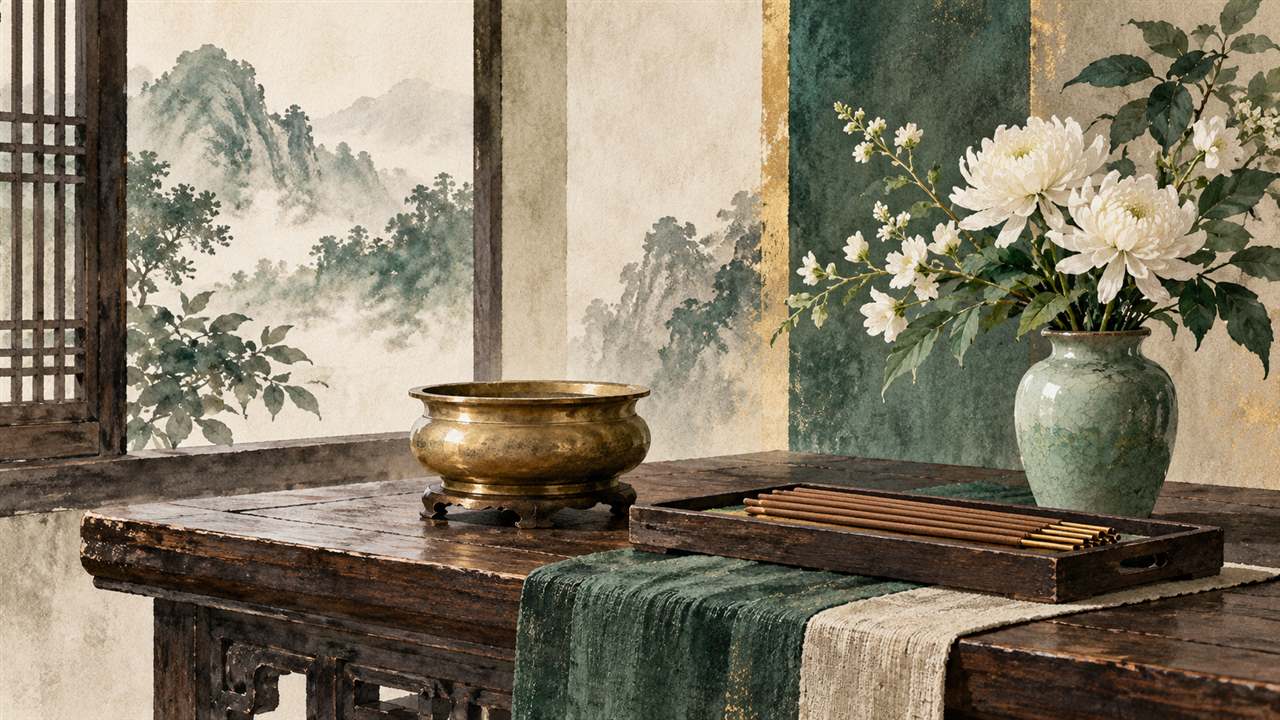
Museum collections are a useful way to see how incense has been used in particular places and times, without claiming that every culture used it the same way. Two very different objects make the point.
A bird-shaped incense burner from Central Asia or eastern Iran
The Metropolitan Museum of Art holds a bird-shaped incense burner dated to the 12th–13th century and attributed to Central Asia or eastern Iran. The museum’s record places objects like this in the context of medieval Islamic hospitality, where perfuming the air could be part of receiving guests and holding gatherings. Here incense belongs to a world of welcome and refined social life, not only to worship.
A Buddhist altar incense burner from Japan
The Nara National Museum’s collection includes a 14th-century kasha, an incense burner from an Esoteric Buddhist altar set. It belongs to a specific ritual setting within a particular branch of Japanese Buddhism, alongside other altar implements with defined roles.
What these examples show
One object comes from a context of hospitality, the other from a Buddhist altar. They were made centuries and thousands of kilometers apart, for different purposes. Together they show why it’s unhelpful to talk about “what incense means in Asia” or “what Buddhists do with incense” as though there were one answer. Practices vary between regions, schools, communities and families.
In Vietnamese homes that keep an ancestor altar, for example, incense is often part of honoring deceased relatives, though customs differ from family to family. Our guide to ancestor worship and Vietnamese traditions explains that context and why it is better to ask a host than to assume.
Cultural practice versus personal use
| Aspect | Religious or cultural practice | Personal home use |
|---|---|---|
| Where meaning comes from | A tradition, community or family custom | The individual’s own preferences |
| Who decides how it’s done | The tradition and the people within it | The person and anyone they share space with |
| Role of a visitor | Follow the host’s lead, ask first | Speak up about comfort or sensitivities |
| Safety basics | Same: attended flame, stable holder, ventilation | Same: attended flame, stable holder, ventilation |
Notice the last row. Whatever the meaning, smoke and embers behave the same way. Respecting a tradition and staying safe aren’t in conflict.
Etiquette for visitors
The suggestions below are our own, based on general courtesy. Follow the site’s instructions, and ask your host about local customs while keeping your own comfort and safety in mind.
At a home altar
If you’re invited into a home where incense is part of a family practice, it’s perfectly fine to ask whether you should light some or simply watch. Don’t move offerings, photos or the incense bowl. If you’re asked to take part, follow your host’s example for how to hold, place and step back, rather than doing what you’ve seen elsewhere. Customs differ between families, so there’s no single “correct” method to bring with you.
At a temple or place of worship
Look for signs and watch what others do. Some places provide incense, some ask visitors not to light any, and some have a particular area for it. If you’re unsure, observe quietly or ask a staff member or volunteer. Photographs may not be welcome, especially of people at prayer.
When you’d rather not take part
You don’t have to light incense to be respectful. Ask whether quietly observing is welcome; gestures and expectations differ between settings. If smoke bothers you, it’s fine to step back politely or stand near a door.
Respectful questions you can ask a host
Gentle questions usually go down well and save you from guessing. A few that tend to work:
“Would you like me to light incense, or is it better if I just watch?”
“Is there anything I should avoid touching or doing near the altar?”
“Is there a particular way your family usually does this?”
“If the smoke bothers me a little, is it all right if I stand by the door?”
Avoid questions that treat the practice as odd or ask your host to justify it. Curiosity framed as interest, not judgment, is almost always welcome.
Shared homes: ask before you light
If you live with others, incense isn’t only your choice. Smoke and scent travel through a home, and housemates, partners, children or visitors may have sensitivities, preferences or simply not like it.
Illustrative scenario: Imagine someone who has started lighting a stick of incense each evening while reading. Their flatmate hasn’t said anything, but has started keeping their bedroom door shut and opening windows. A short conversation, such as “Does the incense bother you? We can choose a smoke-free alternative,” usually solves things before resentment builds.
A few practical points help in shared spaces. Agree on where and when incense is fine. Avoid lighting it in rooms where someone sleeps or works without asking. Keep it well away from children’s reach and from pets, and remember that landlords or building rules sometimes restrict open flames.
When tradition and health concerns meet
Sometimes the people who care most about incense and the people most affected by smoke are in the same family. That can feel awkward, but it is usually solvable with patience.
Illustrative scenario: Imagine a family preparing for a visit from a relative who finds smoky rooms uncomfortable. Before the visit, they discuss what incense means to them and agree to keep the gathering smoke-free, using flowers and a small light for the occasion. This is an example of a household choice, not a substitute prescribed for a religious ceremony.
Conversations like this go better when they start from respect for what the practice means and focus on practical adjustments, not on whether the tradition is right. It also helps to remember that the people involved may decide differently than you would, so everyone should have an opportunity to explain their needs and decide whether they are comfortable attending.
Smoke, indoor air and what we actually know
It’s easy to think of incense as cleansing, but from an air-quality perspective it adds to what’s in the air rather than taking anything away. The US Environmental Protection Agency’s page on sources of indoor particulate matter lists burning incense among the activities that add fine particles to indoor air. Its general advice for reducing indoor particles is to cut down on sources where you can and to improve ventilation.
That doesn’t mean everyone must stop using incense. It means the choice involves a trade-off, and there is no amount we can tell you is guaranteed safe. People who want to reduce their exposure might burn incense less often, use shorter sticks or burn only part of one, open a window, or choose a smoke-free alternative. Anyone with breathing difficulties, or anyone sharing a home with someone who has them, may want to be especially cautious and talk with a doctor if they have concerns.
Fire safety basics
Incense is small, but it involves a flame and a glowing ember. Following an incident it attended, the London Fire Brigade reminded people never to leave burning incense unattended, to use a suitable, fire-resistant holder, and to keep it away from curtains and other things that could catch fire. It also advised making sure incense is fully extinguished before leaving the room or going to bed.
Building on that, a few habits of our own make sense in most homes:
Choose the spot first. A stable, heat-resistant surface, away from curtains, papers, bedding and shelves above that could catch falling ash.
Use a holder that catches ash. A wide dish or a holder with a long tray stops ash and the stub end from landing on furniture.
Stay in the room. If you need to leave, put the incense out first.
Put it out properly. Follow the product and holder instructions for extinguishing it. Confirm that no ember remains and that the ash and holder have cooled before handling or leaving them.
Keep it away from beds. Bedrooms are where people fall asleep with things still burning. If you use incense, do it elsewhere, or well before sleep and fully extinguished. Our guide to feng shui bedroom layout covers other ways to make a bedroom feel calm without anything burning.
Preparation and cleanup choices
A little preparation makes incense easier to use well. These are our own suggestions.
Before lighting: open a window or door if you can, clear the area around the holder, and decide how long you want it to burn. If a whole stick is longer than you need, you can put it out partway and keep the rest.
While it burns: keep an eye on where the smoke drifts and whether anyone nearby seems bothered. Move away from drafts that might blow ash around.
Afterward: once the ash and stub are completely cold, empty them into the bin. Wipe the holder occasionally with a damp cloth so residue doesn’t build up. Air the room for a while if the scent is lingering.
Buying incense: look for clear information about ingredients and where it was made, and be cautious of products making health, cleansing or luck claims. This guide doesn’t cover making incense, charcoal or resin blends at home.
Smoke-free ways to mark a moment or remember someone
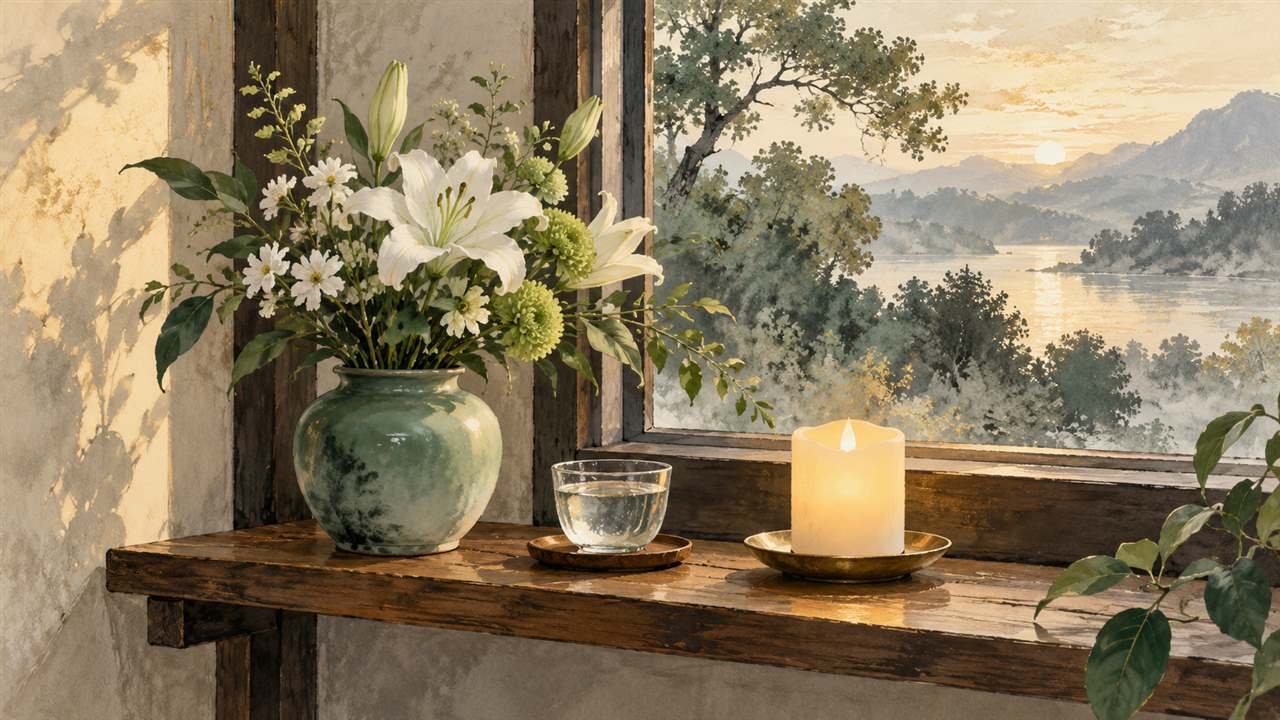
For many people, the point of incense is the pause it creates: a moment of attention, respect or remembrance. That pause doesn’t require smoke. These alternatives are ordinary, everyday options, not substitutes for any religion’s specific rituals.
Fresh flowers. A small vase of flowers beside a photo or on a shelf can mark remembrance or simply bring a room to life.
A glass or bowl of water. Changing it regularly can become a quiet daily habit of care.
An LED candle or small lamp. It gives a soft point of light without a flame, which is useful in rentals, bedrooms or homes with children and pets.
Unlit natural scents. A bowl of citrus peel, fresh herbs or flowers with a light fragrance offers scent without combustion. Keep in mind that some people are sensitive to strong scents of any kind.
A moment of attention. Sitting for a minute, looking at a photo or saying a few words can carry meaning on its own.
Illustrative scenario: Imagine someone whose grandmother always lit incense at her family altar. They now live in a small apartment with a smoke alarm right outside the bedroom and a young child. They keep a photo of their grandmother on a shelf with fresh flowers and an LED light, and when they visit family, they join in lighting incense at the altar there. Both are ways of remembering her.
Frequently asked questions
What does burning incense mean spiritually?
It depends on the tradition and the person. It can be an offering, a sign of respect, part of prayer or meditation, a gesture of hospitality, or simply a way to mark a quiet moment.
Does incense purify the air?
No. Burning incense adds fine particles to indoor air rather than removing anything. If you use it, ventilation helps.
Is it safe to burn incense indoors?
There’s no amount we can guarantee is safe. Using it less, ventilating well, never leaving it unattended and keeping it away from anything flammable reduces the risks.
Should I light incense when visiting someone’s altar?
Ask your host first and follow their lead. Customs vary from family to family, and it’s fine to observe instead.
How do I put out incense safely?
Follow the product and holder instructions, stay present until it is fully extinguished, and confirm that no ember remains. Let the ash and holder cool before handling.
What can I use instead of incense?
Fresh flowers, a bowl of water, an LED candle, unlit natural scents or a quiet moment of attention can all mark a moment without smoke.
Sources and further reading
The Metropolitan Museum of Art, Incense Burner (bird-shaped), collection record.
Nara National Museum, Kasha (incense burner) from an Esoteric Buddhist altar set, collection record.
US Environmental Protection Agency, Sources of Indoor Particulate Matter (PM).
London Fire Brigade, Flat fire in Thornton Heath (incident report, September 2025).