
Missing Items Finder: Retrace Your Steps and Read Thoughtfully
Missing items finder, in brief: start with a practical search. Retrace your steps from the last time you definitely had the item, check pockets and bags, search one zone at a time, and contact any venue or transport operator you used. The finder below offers a traditional, symbolic reading based on a date and time you enter. It can suggest places to double-check, but it is not GPS, tracking or proof of where your item is.
Before you open the tool, run through this quick checklist:
1. When and where did you last definitely use the item?
2. Have you checked every pocket, bag compartment and coat you wore since then?
3. Where did you move between places: a car, a bus, a café, a desk, a doorway?
4. Who could you call: a shop, an office, a transport lost property service?
Then try the finder if you’d like a different lens, and use the rest of this guide to search methodically.
The Way gives rise to One. One gives rise to Two. Two gives rise to Three. Three gives rise to all things.
Direction & Map
No location selected.
Search first: a practical method that works for most lost items
An organized search gives you a clear place to begin. The steps below are our own editorial advice, built around one principle: work from facts outward, and don’t search the same place twice in a panic.
Step 1: Pin down the last confirmed use
Not the last time you think you had it, but the last time you’re sure. “I unlocked the front door with my keys at 6pm” is a confirmed use. “I probably had them at the gym” isn’t. Everything after the last confirmed use is your search window.
Step 2: List the transition points
Check places where you switched activities: arriving home, getting out of a car, paying at a counter, taking off a coat, changing bags, stepping off a train. Write down every transition in your search window. These are your highest-priority places.

Step 3: Empty every pocket and bag completely
Don’t just pat them. Take everything out of each pocket and compartment, including inner zipped pockets, coat linings and the bottom of tote bags. Check bags you used earlier in the day, too.
Step 4: Search in zones, not in circles
Divide each place into zones, such as the hallway, the kitchen counter, the sofa or the car’s front seats, and search one zone fully before moving on. Look under, behind and between things: cushions, car seats, piles of mail, the gap beside the fridge. Mark a zone as done before you leave it.
Step 5: Contact places you can’t search yourself
If you visited a shop, office, library, gym, restaurant, taxi or public transport, contact them directly. Give a clear description, the time you were there and how to reach you.
Step 6: Keep a simple record
Note who you contacted, when, any reference number and what they said. It saves repeating yourself and makes follow-up easier.
Step 7: Recheck with fresh eyes
After a break, recheck your two or three most likely zones. Many items turn up in places already “searched” in a hurry. If someone else can look, a second pair of eyes often helps.
How to use the Missing Items Finder
The finder offers a reading in a traditional, symbolic style. Here’s what it asks for and what it shows, based on how the tool appeared when we tested it.
The inputs
Day, Month, Year, Hour and Minute. You enter a local date and time. The tool doesn’t specify whether this should be the moment you lost the item, the moment you noticed, or the moment you’re asking, and we won’t tell you which traditional rule is correct. Pick one, stay consistent, and note which you used.
Gender: Unknown, Male or Female. The tool doesn’t say whose gender this refers to, so we won’t guess. You can leave it as Unknown.
The reading
When we tested the tool with 15 June 2026 at 12:00, it returned a reading labelled “Blood,” along with the corresponding solar and lunar dates and their stems and branches. The reading was organized into sections:
Gate Overview, Recovery Outlook, Direction and Places, Who to Ask, Surroundings, Timing and Search Area, Possible Condition and What to Do / Search Summary.
Your reading will depend on the date and time you enter. We also observed a 60-second countdown during our test. There’s no need to rush your real search around it.
The direction map
The tool includes a direction map. You can choose Use My Location, which requires your permission for the browser to access your location, or Enter Manually, then press Apply Location. A search radius starts at 200 metres and can be adjusted with a slider.
The map is optional. Skip it if you would rather not provide location information. Manual coordinate entry also provides location information; it is not a promise of anonymity or a private mode.
What the reading can and can’t tell you
This is the most important part of using the tool well. The reading is symbolic. The direction and radius on the map are not GPS coordinates, not a signal from a tracked item and not a verified distance. Sections like Recovery Outlook, Timing and Possible Condition are not probabilities, recovery dates or reports on your item’s state. Who to Ask is not evidence that any particular person has your item.
The table below shows a practical way to use each part of the reading.
| Reading section | Practical way to use it | What it is not |
|---|---|---|
| Direction and Places | A reminder to recheck places you actually visited in that general area | A GPS location |
| Map radius | A prompt to list places within your real route | A measured distance to the item |
| Who to Ask | A nudge to contact venues, operators or household members | Proof that someone has it |
| Timing and Search Area | A cue to plan when to recheck | A reason to delay searching |
| Recovery Outlook and Possible Condition | Reflection only | A probability or condition report |
Let the reading point you back to your own facts. If it mentions a direction, ask which places on your actual route lie that way and whether you’ve searched them properly. If it suggests asking someone, think of the venues and people you can reasonably contact. Never accuse anyone because of a reading, never enter places you don’t have permission to access, and never wait for a symbolic time instead of searching now.
If you’re curious about the cultural background of directional readings, our introduction to feng shui offers a broader lens, and our guide to yin and yang explains some of the ideas behind traditional symbolism.
Worked example: keys and a bag after a library visit
This is a hypothetical scenario for illustration.
Imagine Minh gets home in the evening and can’t find his keys. His partner lets him in. Here’s how he works through it.
Last confirmed use. He locked his bike outside the library at 2pm with the key on the same ring. That’s his starting point.
Transition points. Locking the bike, checking in at the library desk, putting his bag down at a study table, going to the café, unlocking the bike at 5pm (which he now realises he must have done, so the keys were with him then), cycling home, and parking the bike in the shared hallway.
That last insight narrows things a lot. Since he unlocked the bike at 5pm, the keys left the library with him. The search window shrinks to the ride home and the hallway.
Pockets and bags. He empties his jacket, jeans and backpack completely, including the laptop sleeve. Nothing.
Zones. He checks the bike itself: the basket, the lock holder and the ground around it in the hallway. He checks the hallway floor, the shoe rack and behind the door.
Using the reading. For interest, Minh tries the finder. The reading mentions a direction. He asks himself which real places on his route lie that way, realises it points roughly toward the bins he passed near the entrance, and remembers stopping there to drop a bag of recycling.
Result. He checks the area by the bins, with a torch, and finds the keys on the ground beside them. The reading didn’t locate the keys. It prompted him to recheck a real transition point he had forgotten.
If he hadn’t found them, his next steps would have been to call the library’s front desk with a description, check whether the café had found anything, and record both calls.
Worked example: a shared-home item
Another hypothetical scenario.
Imagine a family can’t find the TV remote. Four people live in the house, and everyone insists they didn’t take it.
Last confirmed use. Someone used it last night to switch the TV off.
Transition points. The sofa, the coffee table, the kitchen (someone took a snack), and the bedrooms.
Zones. They agree to split the zones: one person takes the sofa (under and between cushions, under the sofa itself), one takes the kitchen counters and fridge top, one checks the coffee table and nearby baskets, and one checks the bathroom and bedrooms, but only their own room, plus shared spaces. Nobody searches anyone else’s private space without asking.
Using the reading. If someone tries the finder and it mentions asking a person, the family treats that as a cue to ask everyone, kindly, to check their own bags, pockets and rooms. It’s not a reason to point at anyone.
Result. The remote turns up inside the fruit bowl. The calm, zone-by-zone search worked, and nobody was blamed.

A simple search log you can copy
Writing things down stops you searching the same drawer five times and makes calls to venues quicker. A few lines in a notes app are enough. Here’s a template of our own:
Item: what it is, plus colour, brand and anything distinctive.
Last confirmed use: time and place.
Transition points since then: a short list in order.
Zones searched: each zone with a tick and the time you searched it.
Contacts made: organization, time, reference number, what they said, when to follow up.
Next step: the single most useful thing to do now.
If you used the finder, you can add one line noting the date and time you entered and any place it prompted you to recheck. Keep that line separate from your facts, so the log stays clear about what you know and what was only a suggestion.
Items lost on public transport or at a venue
If you think you left something on a bus, train or taxi, or at a shop or venue, contact the right organization promptly. Each operator has its own process.
As one example, Transport for London’s lost property page explains how to report items lost on its services in London and how to check whether they’ve been found. Other cities and transport companies have their own systems, so look up the operator you actually used.
When you report an item, include a clear description (colour, brand, distinguishing marks), when and where you think you lost it, and your contact details. Keep any reference number.
Lost payment cards
If you’ve lost a bank or payment card, contact your card issuer promptly so they can protect your account. Don’t wait for a reading or a search to finish first.
When this tool isn’t the right place to start
This finder is for everyday lost items. If a person is missing, contact the relevant emergency services or authorities immediately. If a pet is missing, act quickly with practical steps. Our lost pet finder guide is a better starting point.
Preventing the next lost item
Once you’ve found it, or replaced it, a few habits make the next search easier. These are our own suggestions.
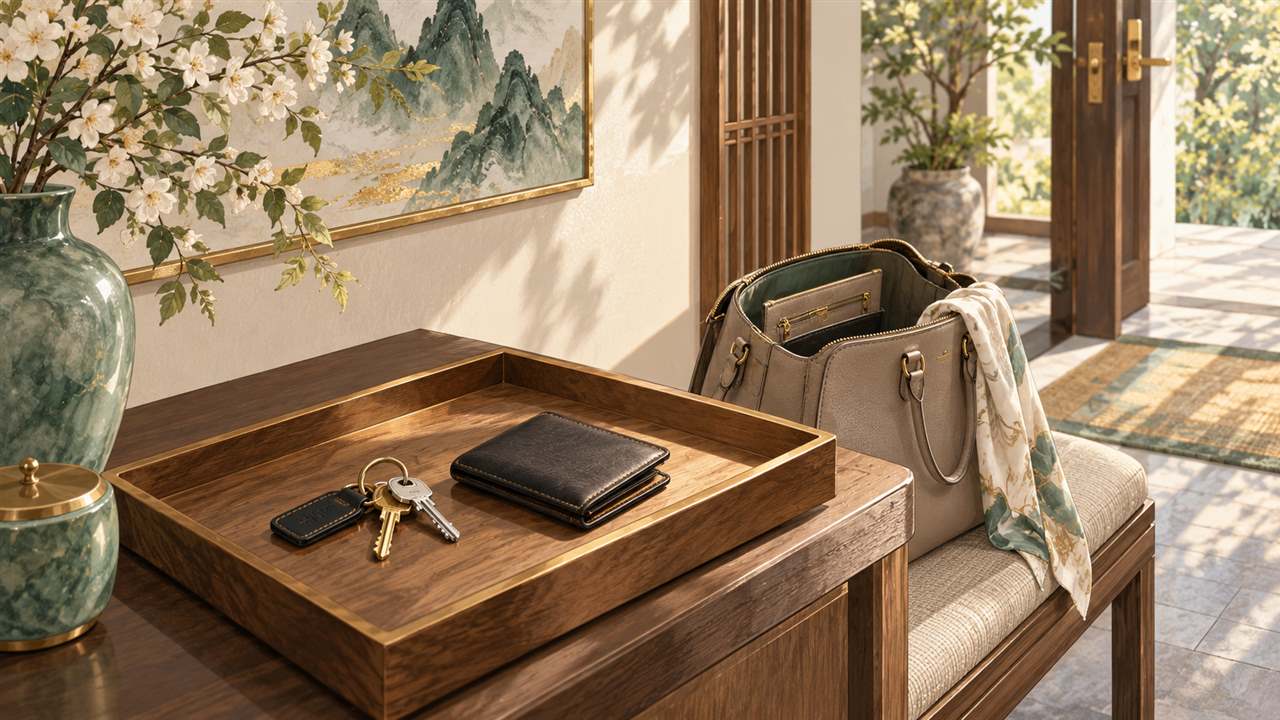
Give key items a home. A bowl or hook by the door for keys, a fixed pocket for your phone, a set spot for your wallet.
Pause at transitions. Before you leave a café, a car or a train, do a quick “phone, wallet, keys” check.
Label things you carry often. A tag with a phone number or email on keys, bags and umbrellas can help an honest finder return them. Avoid putting your home address on keys.
Consider a tracking device for important items if that suits you. Depending on the device, it may offer a proximity signal or a last reported location. Check its limits, compatibility, costs and privacy settings.
Keep a list of numbers. Your card issuer’s contact number and the lost property contacts for transport you use regularly can save time when it matters.
Frequently asked questions
Can the Missing Items Finder tell me exactly where my item is?
No. It gives a symbolic, traditional reading. The direction and radius aren’t GPS or tracking data. Use the reading only as a prompt to recheck places you actually visited.
What date and time should I enter?
The tool accepts a local date and time but doesn’t specify which moment to use. Choose one, such as when you noticed the item was missing, and stay consistent.
Whose gender does the tool ask for?
The tool doesn’t specify. You can leave it set to Unknown.
Do I have to share my location?
No. You can skip the map. Use My Location requests browser permission, while manual coordinate entry is an optional alternative.
The reading mentions asking someone. Does that mean they took it?
No. A reading is never evidence. Treat it as a reminder to contact venues, operators or household members politely, without accusing anyone.
What should I do if I lost my bank card?
Contact your card issuer promptly. Then continue your search and report the loss to any venue or transport operator you used.
Sources and further reading
Transport for London, Lost property.